Bat Removal in Raleigh, NC
The City of Oaks has more than a century of houses, and bats find the gaps in all of them. This is our home market, and this page covers it in depth.
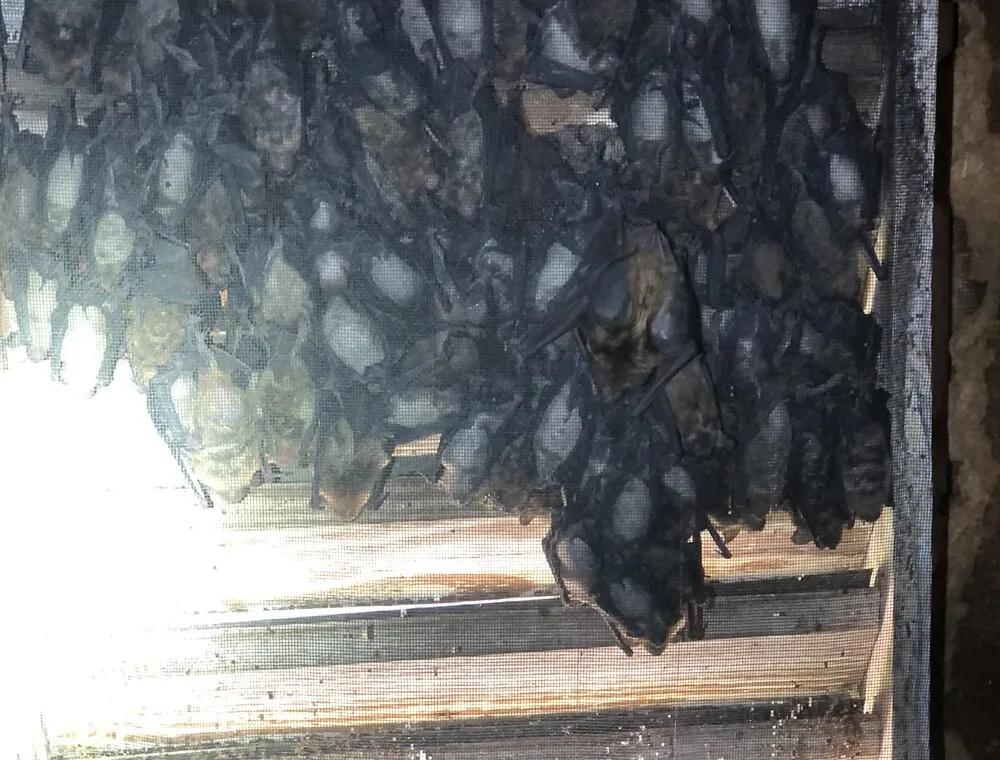
Raleigh was built for oaks, and bats followed
Raleigh is one of the few American cities planned from scratch as a state capital. The site was chosen in 1788, the city was incorporated in 1792, and it still carries the nickname City of Oaks for the tree-lined streets that grew up around the original grid. By the 2020 census, 467,665 people lived here, most of them in Wake County with a small slice of the city in Durham County.
All those trees, plus more than 100 miles of greenway along creeks and lakes, make Raleigh good bat country. That part is fine. Bats eat close to their body weight in insects every night, and the ones working the air over Crabtree Creek or Lake Johnson are doing the city a favor.
The trouble starts when a colony decides your attic, wall void, or soffit is a better place to raise pups than a hollow tree. That’s what this page is about: why it happens in Raleigh, what it looks like on the kinds of houses people here actually live in, and how we get the bats out without breaking North Carolina’s rules or trapping animals inside.
What makes Raleigh different from the rest of the Triangle
The biggest factor is range. Raleigh has houses from nearly every decade since the 1870s, sometimes on the same street. A Victorian in Oakwood, a 1925 bungalow in Bloomsbury, a 1960s ranch off Millbrook Road, and a 2012 two-story in Wakefield all get bats, and each gets them in a different way.
The second factor is how Raleigh grew. The older core sits inside the I-440 Beltline. Outside it, North Raleigh and the areas toward Brier Creek filled in during the later 20th century with ranches, split-levels, and subdivisions, and newer construction keeps spreading. That’s why “inside the Beltline” and “outside the Beltline” are useful shorthand for us, even though they’re rough.
The third factor is water and woods. Umstead State Park on the west side, the Neuse River on the east, and creek corridors like Crabtree, Walnut, and House Creek run right through neighborhoods. Seeing bats around dusk in most of Raleigh is normal. Seeing them come out of the same spot on your roofline is not.
The bats that end up in Raleigh buildings
North Carolina has 17 bat species. Three are federally endangered and one more is federally threatened, and the NC Wildlife Resources Commission lists ten as Species of Greatest Conservation Need. Only a few of them regularly move into buildings. In central North Carolina, the usual ones are:
- Big brown bats, sturdy, adaptable, and willing to use attics and wall voids, including through cold weather
- Evening bats, which roost in trees but also in buildings and attics
- Mexican free-tailed bats, which form maternity colonies in structures
- Little brown bats, once common in attics and barns, now much reduced in the East by white-nose syndrome
We don’t need to identify the species to do the job, and we never handle bats to find out. The method is the same for all of them: find every opening, let them leave, seal the building.
Bat season on the Raleigh calendar
Raleigh’s climate is humid subtropical, with a normal July mean around 80.5°F, a January mean near 42°F, and about 46 inches of rain a year. That warmth is part of why attics here are attractive to bats in late spring and early summer, when pregnant females look for the hottest, most protected space they can find.
Here’s how the year usually plays out:
| When | What bats are doing | What we can do |
|---|---|---|
| March and April | Returning to summer roosts, often the same attic as last year | Inspect and exclude before pups arrive |
| May 1 to July 31 | Pups born and raised; they can’t fly for weeks | Evictions barred by NC rules. We inspect, seal gaps into living space, and schedule |
| August and September | Pups flying, colonies still in place | Prime exclusion season, and our busiest stretch |
| October through February | Some bats leave, some overwinter in buildings | Exclusion and repair continue; inspections for spring |
The May through July window is the part that catches Raleigh homeowners off guard. You might discover a colony in June, when the attic is hottest and the smell is strongest, and learn that nobody can legally evict them until August. The NC Wildlife Resources Commission’s bat biologist has put it bluntly: evicting bats during pup season ensures the pups starve. Dead pups in a wall void are a far worse problem than a few more weeks of a live colony.
What we can do in summer is inspect, confirm it’s bats, seal any gaps leading into rooms where people live, and put your exclusion on the August schedule. Calling early in summer is the best way to be near the front of that line.
Old Raleigh: Oakwood, Boylan Heights, Five Points, and inside the Beltline
Historic Oakwood and Blount Street
Oakwood holds Raleigh’s largest concentration of 19th-century Victorian houses, with building continuing into the early 1900s. Blount Street’s big homes date to the same era: Queen Anne, Second Empire, Italianate, Colonial Revival, and later bungalows. These houses are beautiful and complicated from a bat’s point of view:
- Decorative eaves and cornices where wood has shrunk and separated
- Steep gables meeting at angles that are hard to flash tightly
- Attic louvers with screening that failed decades ago
- Chimneys with old flashing
- Rear additions whose rooflines never quite matched the original
On houses like these, we rarely find one hole. We find the active exit, then five or ten other gaps big enough to use once that exit is closed.
Boylan Heights, Glenwood-Brooklyn, and Mordecai
Boylan Heights was one of Raleigh’s early planned suburbs, mostly built between 1907 and 1930, and it’s dominated by Craftsman bungalows. Glenwood-Brooklyn grew as an early streetcar suburb with Queen Anne and Craftsman houses. Mordecai, north of downtown, mixes historic homes with later infill. On bungalows, our eyes go straight to deep overhanging eaves, exposed rafter tails, gable vents, porch-roof connections, and the transitions between soffit and fascia.
Five Points: Hayes Barton, Bloomsbury, Roanoke Park
Five Points is a cluster of neighborhoods built mostly from the 1910s through the 1950s. Hayes Barton, developed heavily from the 1920s, has larger houses with more involved roofs. Bloomsbury is known for 1920s bungalows with deep eaves. Roanoke Park mixes 1910s cottages, bungalows, Foursquares, and some 1950s ranches. Many of these houses have been renovated more than once, and the seams between old and new work are where we spend a lot of inspection time.
West Raleigh and Cameron Park
West Raleigh’s housing runs from the late 1920s through the postwar years: Colonial Revival, Craftsman, period cottages, and ranches near NC State and along Hillsborough Street and Wade Avenue. Cameron Park, near the university, has early 20th-century homes under a heavy canopy. Our office is on Chapel Hill Road in west Raleigh, so this part of the city is close to home for us.
Newer Raleigh: North Hills, North Raleigh, and Brier Creek
Outside the Beltline, the story changes. North Hills mixes mid-century houses with remodels and new infill. North Raleigh, from Six Forks and Falls of Neuse out to Strickland and Leesville Roads, is mostly ranches, split-levels, and subdivisions built largely from the 1980s through the 2000s. Falls River, Bedford, and Wakefield are newer still, and Brier Creek is mostly recent residential and commercial construction.
These houses are usually tighter than a Victorian, but “newer” doesn’t mean bat-proof. What we find instead of rot is a construction detail:
- An open soffit return where the gutter line meets a gable
- A dormer corner where siding, trim, and roof don’t quite close
- A ridge vent end or gable vent without proper screening
- A roof-to-wall intersection over a garage or porch
- Gaps around utility penetrations
Subdivisions repeat designs. If bats found a gap in one house’s soffit return, the same gap may exist on neighbors built from the same plan. We’ll point that out if we see it.
How bats show up in a typical Raleigh house
Most Raleigh calls follow a pattern. Someone hears faint chirping or scratching above a ceiling in the evening and assumes squirrels or mice. Small dark droppings turn up on a windowsill, porch, or driveway. Eventually someone watches the roof at sunset and sees bats dropping out of one spot, sometimes a handful, sometimes dozens.
The natural next move is to seal that spot. Please don’t. If bats are inside when the gap is closed, they’ll look for another way out, and in older Raleigh houses there are plenty of routes into the living space. That’s how a roofline problem turns into bats in the bedroom.
Other ways Raleigh homeowners find out:
- A bat turns up in the house, often in late summer when young bats start flying
- A roofer or painter finds guano behind trim during a repair
- A home inspection flags droppings in the attic during a sale
- A strong smell comes through a ceiling on a hot afternoon
- A dog or cat corners a bat on the porch
What a Raleigh exclusion looks like
Every job follows the same order, whatever the house:
- Inspection. We walk the whole roofline and go into the attic when we can. We look for staining, guano, and the dark rub marks bats leave at the openings they use. On two-story and older homes, we’ll often point out gaps you can’t see from the ground and show you photos.
- Secondary sealing. Openings the colony isn’t using are sealed first, with materials that fit: sealant, screening, hardware cloth, trim repair, or flashing work.
- One-way exits. Exclusion devices go on the active openings. Bats leave to feed at dusk and can’t get back in.
- Confirmation and final seal. Once the colony is out, the devices come off and those last openings are closed permanently.
- Cleanup if needed. Established colonies leave guano and urine in insulation. We remove it, sanitize, and restore the attic. See attic cleanup and guano removal.
North Carolina requires paid bat evictions to be done by a licensed Wildlife Control Agent, and the state’s rules set the May 1 through July 31 moratorium. Both shape how we schedule every Raleigh job.
Raleigh’s greenways, lakes, and why bats are everywhere at dusk
Raleigh has more than 100 miles of greenway trail, much of it following water. The Neuse River Greenway runs about 27.5 miles from Falls Lake toward the Johnston County line. The Crabtree Creek Greenway runs about 18 miles from near Umstead to the Neuse. Walnut Creek winds more than 15 miles through southern Raleigh. Add Lake Johnson, Lake Lynn, Shelley Lake, Durant Nature Preserve, and Umstead State Park, and a lot of Raleigh sits within a short flight of good insect habitat.
That’s why we never tell people that living near a greenway means they have bats. It means bats are around, as they should be. The question is whether one of them has found a structural opening that gives it access to your attic, soffit, or wall.
Heat, humidity, and storms
Raleigh summers make attics hot, and heat makes an established roost more noticeable. Odor from guano and urine often shows up first on the hottest afternoons of June and July, which is also when you can’t legally evict. Humidity doesn’t cause bat problems, but it does help wood trim swell, shrink, and rot over the years, which opens gaps on older homes. Thunderstorms and falling limbs knock soffits and vents loose, and roof repairs after a storm sometimes uncover a colony that’s been there for years.
Commercial and institutional buildings in Raleigh
Raleigh is a state capital and a college town, with NC State, Meredith, Shaw, William Peace, and Saint Augustine’s all inside the city, plus downtown’s historic commercial blocks, dozens of churches, and office buildings from downtown to North Hills and Brier Creek. The crew has worked on college campuses, office buildings, schools, churches, historic buildings, warehouses, condos, HOA properties, and multi-level buildings. Big buildings mean more roof and more openings, and they need planning around occupants. See commercial bat removal, our page for churches and historic buildings, and the one for property managers, condos, and HOAs.
Health questions we hear in Raleigh
Rabies. Bats are a rabies vector species in North Carolina, though most bats don’t carry the virus. Bites can be tiny. If a bat was in a room where someone slept, or a child or pet may have touched it, keep it contained without touching it and call your doctor or Wake County public health before releasing it. Our emergency bat removal page walks through that moment.
Histoplasmosis. Accumulated guano can carry the fungus behind histoplasmosis. The risk is breathing dust when it’s disturbed, so don’t sweep it or run a household vacuum through it.
Bat bugs. Established colonies can bring bat bugs, a relative of the bed bug. One of our customers had them biting her in a home office below a roost; the crew excluded the bats and treated for the bugs twice.
Mistakes we see on Raleigh houses
- Foam in the one obvious hole. On older homes especially, bats just move to the next gap or come indoors.
- Waiting until fall to call. By then everyone who found bats in June is already on the schedule.
- Ultrasonic repellers, mothballs, and attic lights. None of them close an opening.
- Treating one house in a row of identical ones. In newer subdivisions, the same construction gap may exist next door.
- Cleaning the attic before the exclusion. You’ll be cleaning it again.
What affects the price of bat removal in Raleigh
We quote after an inspection because the building sets the price, not the number of bats. The main factors:
- How many openings need sealing, which is usually more on older houses inside the Beltline
- Roof height and pitch, since a steep Victorian gable takes more time and equipment than a ranch
- How much repair each gap needs, from a bead of sealant to replacing a rotted fascia board
- Whether guano cleanup and insulation replacement are part of the job
- For commercial buildings, access, height, and working around occupants
Talk to a Raleigh crew
Triangle Bat Removal is the bat division of Integrated Wildlife Management, owned by Joe Zets and based at 6512 Chapel Hill Road. The same crew inspects, excludes, repairs, and cleans up, and the exclusion work is backed by a warranty. We also work across the rest of the Triangle, covered on the Triangle Bat Removal home page. To start, read how bat removal and exclusion works or call (984) 246-0981.
Bat services in Raleigh
Raleigh bat questions
My house is in a Raleigh historic district. Does that affect bat exclusion?
It can. Raleigh's historic districts, like Oakwood and Boylan Heights, review certain exterior changes. Temporary exclusion devices and small repairs matched to existing materials are usually simple, but check with the City of Raleigh's historic preservation staff before any visible replacement work. We'll tell you exactly what we plan to change.
How fast can you get to a Raleigh address?
Our office is on Chapel Hill Road in west Raleigh, so most of the city is a short drive. For a bat inside the house, call and we'll give you a realistic time.
I see bats over Lake Johnson and Shelley Lake every evening. Should I worry?
No. Raleigh's lakes, creeks, and greenways are where bats should be feeding. What matters is whether bats are coming out of your house at dusk.
Who do I call about a possible bat bite in Raleigh?
Your doctor, urgent care, or Wake County's public health office. Keep the bat contained if you can do it safely; they may want it tested. Then call us about how it got in.
Are there bats in Raleigh in winter?
Yes. Some bats spend cold weather in buildings instead of caves. Winter is still exclusion season in North Carolina, and it's a good time to inspect before spring.
Do you work on buildings at NC State or other Raleigh campuses?
The crew has worked on college campuses and other large buildings. Facilities teams can reach us for an inspection and a written scope.
What customers say
I cannot thank Joe and his team (Chris, Forrest, Mike & Grayson) enough for the work they put in for a successful bat exclusion and bat bug remediation. I reached out in June for noises I was hearing in the ceiling of my home office. They inspected very quickly & identified bats... They were able to close any other entry points, Chris fixed our exhaust vents and they successfully excluded the bats. They did a great clean up job & treated for the bugs twice.
Marian Morritt on Google
Mike from Integrated Wildlife Management came to my home recently to do an inspection of a bat colony that was roosting in one of our gable vents. He did a thorough inspection, pointed out some other entry points in our attic and gave a fair quote. He came back to do the removal and exclusion work this week and everything was done as promised. When I had a question about the warranty, Joe gave me a straightforward answer and addressed my concerns.
Peter Dooling on Google
Had an unexpected bat in our fireplace on a Saturday night at 5:30pm and a quick search led me Joe and the Integrated team. They had the bat out of the fireplace by 8:30pm and came back for a full inspection the next day! I was very impressed with their quick reply during weekend hours and their professionalism to get the job done right!
Nick H. on Google
Ready to get it handled?
- You'll talk with Joe Zets or his crew, not a call center
- Exclusion work backed by a warranty
- Homes, churches, campuses, and commercial buildings
- Emergency help when a bat is inside